Opening a restaurant in New York starts in the mid six figures for a modest room and passes a million dollars for a full-service fit-out in a raw space. The spread is wide because the cost to open a restaurant in NYC is really a stack of separate costs: the build-out, the kitchen, the furniture, the licenses, the lease, and the money you need before a single guest walks in. This guide breaks the total into its line items, with sourced ranges, so you can build a real budget instead of a hopeful one.
The cost to open a restaurant in NYC, in round numbers
Nationally, a leased-space restaurant averages about $275,000 to open, inside a working range of roughly $180,000 to $800,000, according to an industry survey of operators. New York sits at the top of that range and past it, for one structural reason: it is the most expensive city in the world to build, at an average of $5,744 per square meter and construction labor near $131 an hour, per Turner & Townsend's 2025 market report. A concept that opens for $300,000 in a mid-size market can cost half again as much here, or more.
So carry a planning figure, then refine it against real bids. For a small second-generation space, meaning one that already has a kitchen hood, grease trap, and working HVAC, a budget in the low-to-mid six figures is realistic. For a full-service restaurant built into a raw box, plan for seven figures before you see a single number from a contractor. Design and construction is the largest share of that total, and it is also the share you have the most control over. We cover that piece on its own in what restaurant interior design costs.
Where the money goes, line by line
A restaurant budget is not one number. It is seven, and each has its own range.
- Build-out (construction). NYC restaurant construction runs $200 to $500 per square foot: about $200 to $300 for a basic fit-out, $300 to $400 for mid-range work, and $400 to $500 and up at the high end. On a 2,000-square-foot space that is $400,000 to $1,000,000 for construction alone.
- Kitchen equipment. Budget roughly $75,000 to $115,000 for a full commercial kitchen, and more for scratch or high-volume cooking.
- FF&E (furniture, fixtures, and equipment). The dining room's tables, chairs, banquettes, lighting, and millwork. This line is small next to construction but heavily exposed to design decisions, which is where it tends to drift.
- Licenses and permits. The Health Department's Food Service Establishment Permit is $280. Liquor licensing is the variable one, adding hundreds to a few thousand dollars in state and filing fees plus attorney time, and weeks to months of waiting.
- Security deposit and lease costs. Commercial landlords commonly ask for several months of rent up front, and more from an operator without a track record. Some spaces also carry key money. Read the deal before you commit to the room, as we argue in what to check before you sign the lease.
- Pre-opening and working capital. Payroll during training, opening food and beverage inventory, insurance, marketing, and enough cash to run at a loss through the first slow months. Plan for at least three to six months of operating runway. The openings that fail early usually run out of cash before they run out of guests.
- Contingency. Budget 10 to 15 percent of the total for what the walls hide.
Add those honestly and a full-service NYC restaurant clears a million dollars quickly. The two lines that move the total the most are the first and the last.
Build-out is the number that moves everything
Construction is both the biggest line and the least predictable, which makes it the place a budget is won or lost. A renovation-cost survey put New York at about $216 per square foot against a national average near $160, and inside a single room the split is uneven: roughly $300 to $350 per square foot in the front of house and about $200 in the back. Kitchens, ventilation, ADA paths, and health-department plan review all resolve in one small floor plate, and each of them is a filing. That permit sequence sets your opening date as much as your budget, which is why we mapped it separately in the NYC restaurant build-out permit timeline.
The New York premium is not a markup. It is labor at $131 an hour, a tight market for skilled trades, and a review process with more steps than most cities run. You are not overpaying; you are building in the most expensive market there is. That is also why the size of the space you sign matters more here than almost anywhere: at these rates, every extra hundred square feet is real money, and a floor plan that seats the same covers in less area is a budget decision as much as a design one.
Design's share, and where it earns its keep
Design and construction is usually the single largest category in the total, which makes it the place a budget quietly fails. A renovation survey found the average restaurant remodel runs 34 percent over budget. On an $800,000 fit-out, that is more than a quarter of a million dollars of unplanned spend, and most of it lands after the contractor is on site: a wall opened without knowing what runs inside it, a finish swapped under deadline, millwork priced from a sketch and rebuilt from a drawing.
The design fee is the smallest line on the budget with the most control over the largest one.
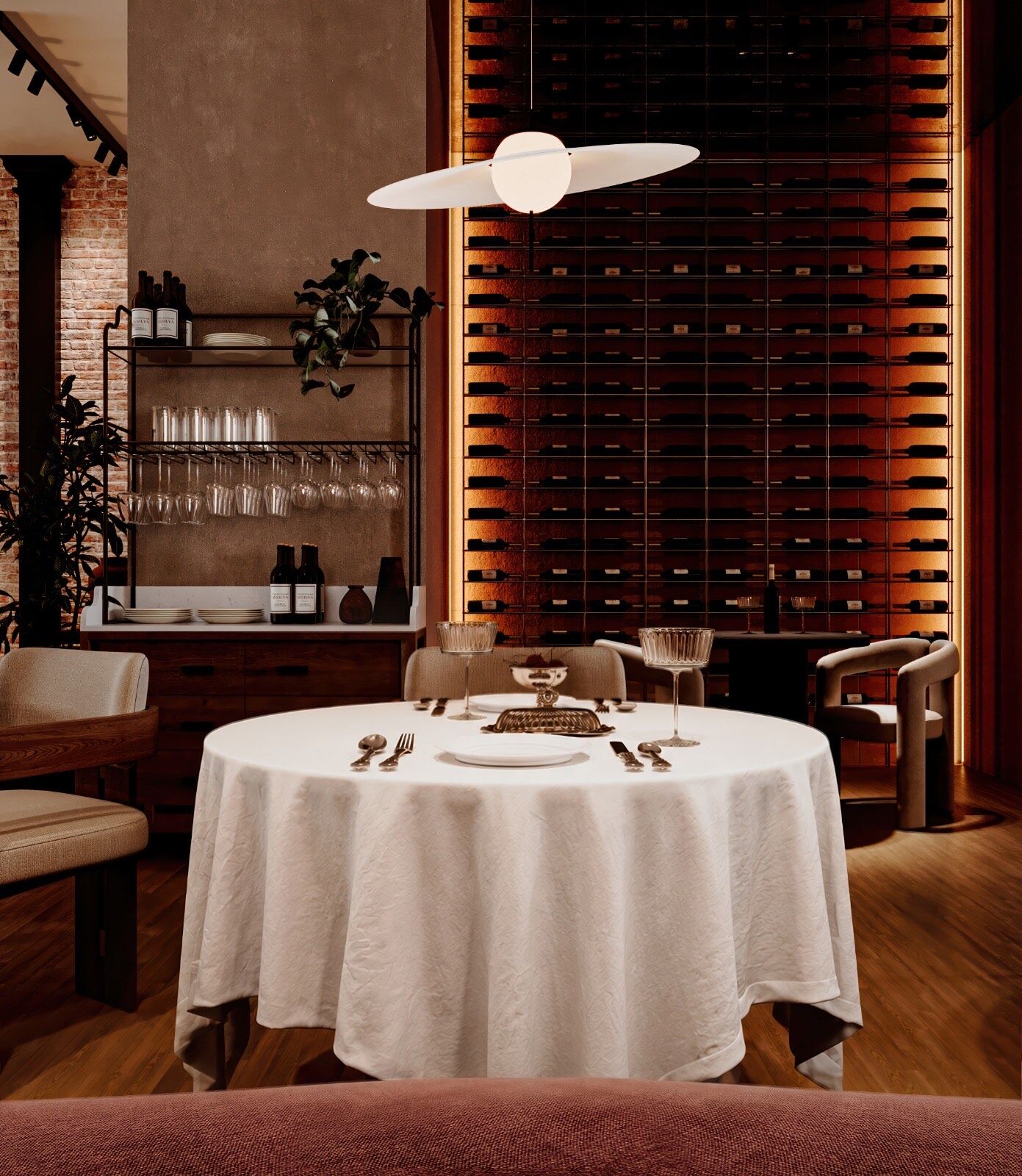
This is where method matters more than the rate card. At ORÉA COLLECTIVE we issue full drawing sets before any trade is engaged, so the contractor prices a resolved design instead of an estimate of one. When we built Sesilya, a Georgian restaurant in Park Slope, every millwork dimension and finish was on paper before the job went out for bids, and we stayed through installation, when most of the costly on-site decisions actually get made. A drawing set that answers questions before they reach the field is the cheapest insurance a restaurant budget can buy.
How to hold the number down
Two things hold the total down more than any single negotiation. The first is the space you sign. A second-generation restaurant, already fitted with a hood, grease trap, and adequate power, can cut construction cost by a large fraction against a raw white box, and it shortens the permit path at the same time. The trade is flexibility: you inherit someone else's kitchen layout and have to design around it.
The second is finishing the drawings before you price the work. When the contract is written against a complete set, the number in it is a real number, the bids are comparable, and the contingency stays a contingency instead of becoming the plan. Most of the 34 percent overrun lives in the gap between a design that looked done and a design that was.
Build the budget from the line items above, add the contingency before you need it, and treat the design fee as the lever on the biggest number rather than another cost to trim. If you are planning a restaurant in New York, start with a conversation.