An interior designer in New York bills anywhere from $100 to $400 an hour, and a full-scope residential design fee runs from about $8,000 to past $100,000. The spread is not evasion; it tracks real differences in scope, seniority, and what the fee actually buys. This guide lays out interior designer cost in NYC by fee structure, with sourced ranges, so you can read a proposal and know what you are looking at.
The short answer, in numbers
The interior designer hourly rate in NYC sorts by seniority: roughly $100 to $150 an hour for a junior designer, $150 to $200 for a senior designer, and $200 to $400 for a principal, according to one New York firm's published rate guide. A 2026 city cost guide lands on nearly identical figures, with principals at $300 to $400 and up. A renovation marketplace's cost survey puts the full citywide spread at $50 to $400 an hour depending on experience, as of 2022.
Flat design fees, meaning the design work alone and not the construction it directs, fall into three bands per the same 2026 guide:
- Small apartment, 500 to 1,000 square feet: $8,000 to $25,000
- Full apartment renovation: $25,000 to $70,000
- Townhouse or large residence: $70,000 to $100,000
Single rooms price at $2,000 to $15,000 each in New York. Percentage-based fees sit at 10 to 20 percent of the renovation budget; the low end of that band comes from the 2026 guide, and the marketplace data has large-scale projects at 15 to 20 percent.
Put plainly: if you are asking how much an interior designer costs in NYC before you have drawings or bids, carry 10 to 20 percent of your intended construction budget as a planning figure, then refine it against real proposals.
How interior design fees are structured
The professional association for the field, ASID, recognizes five standard fee methods: fixed fee, hourly, cost plus (the designer buys at net and resells at net plus an agreed percentage), per square foot for larger commercial projects, and retainer. The common arrangement now is a hybrid. Design work bills hourly or at a fixed fee; purchasing runs cost plus.
Cost plus deserves a closer look, because it lives in the furniture budget where clients rarely think to look for fees. A typical New York furnishings markup is around 40 percent: a bed the designer buys at $4,000 net reaches your invoice at $5,600. Marketplace reporting puts the commission spread wider, at 20 to 50 percent over net pricing, as of 2022. None of this is improper. It should simply appear in the contract as a number, in writing, before you sign anything.
What you get at each tier
At the hourly or per-room tier, you are buying decisions: a layout, a palette, a purchasing list. You execute. This is the right purchase for a cosmetic refresh or a single room furnished at retail, and it is why the per-room band starts at $2,000.
The middle tier, usually a flat fee, adds documentation: floor plans, sections, lighting and finish schedules, and enough site visits to keep the built work honest to the drawings. Documentation is the quiet difference between tiers. A contractor pricing from a drawing set gives you a real number; a contractor pricing from a conversation gives you an opening bid.
Full service adds procurement and construction-phase presence. The designer manages orders, checks shop drawings, answers the contractor's questions the day they come up, and stays through installation. That last stretch matters more than it sounds. Much of what clients later call a designer's mistake is a decision made on site, quickly, with nobody from the design side in the room. Interior designer cost in NYC scales less with square footage than with how many of those decisions you want covered. If you are weighing tiers against actual candidates, we wrote separately about how to hire an interior designer in NYC.
What pushes interior designer cost in NYC up
Four things, mostly. Scope: structural changes, kitchens, and baths carry more drawings, more coordination, and more liability than paint and furniture. Building type: landmarked facades and co-op boards add review rounds that bill by the hour. Staffing: a principal-led project costs more than one staffed down to a junior, and proposals do not always volunteer who will actually be at the table. It is worth asking. Purchasing volume matters too; on a cost-plus arrangement, a heavily furnished project earns the designer more, which is exactly why the percentage belongs in the contract.
The fourth is overhead, and it explains the numbers more than anything else. Nationally, the median annual wage for interior designers was $63,490 in May 2024 per the Bureau of Labor Statistics. A $250 hourly rate is not the designer's take-home; it carries studio rent, insurance, software, and the unbilled hours of running a practice in this city.
If you are opening a restaurant
Design fees only make sense read against the buildout they steer. Restaurant construction in New York runs $200 to $500 per square foot: $200 to $300 for a basic buildout, $300 to $400 for mid-range work, and $400 to $500 and beyond at the high end, with a recommended contingency of 10 to 15 percent. Older marketplace figures, as of 2019, had front-of-house space at $300 to $350 per square foot and back-of-house near $200, with restaurant design costs spanning $25,000 to $400,000 depending on scope. The numbers are large because the coordination is: kitchen equipment, ventilation, ADA paths, health department plan review, all resolved in one small floor plate. We break the category down in our guide to restaurant interior design cost.
Where the fee pays for itself
The same 2019 marketplace guide found the average restaurant budget overrun was 34 percent. On a $600,000 buildout, that is roughly $200,000 of unplanned spend. Most of it comes from decisions made after the contractor is on site: a wall opened without knowing what runs inside it, a finish substituted under deadline, millwork priced from a sketch and rebuilt from a drawing.
The design fee is the smallest number on the budget with the most control over the largest one.
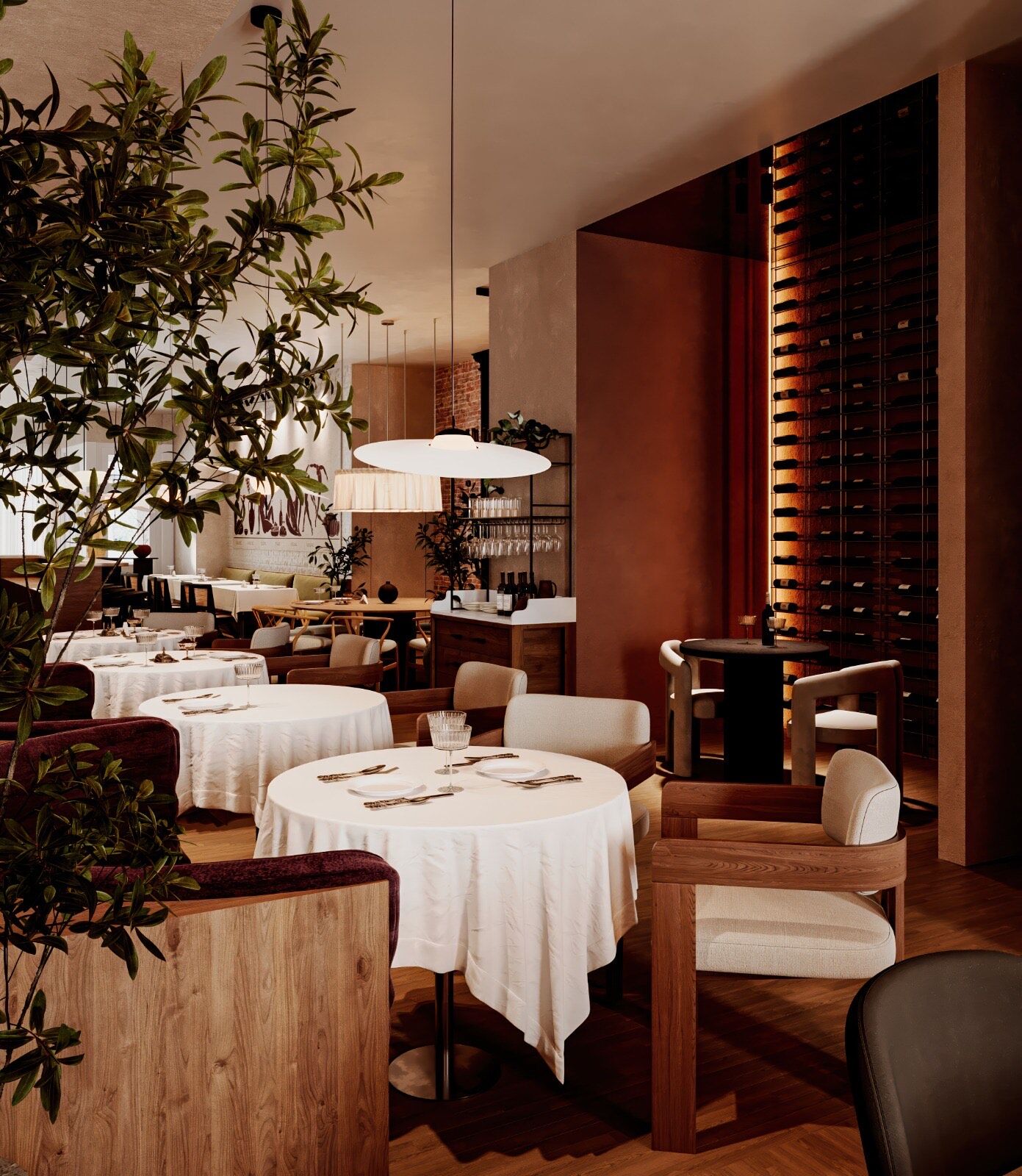
This is where practice matters more than the rate card. At ORÉA COLLECTIVE we issue full drawing sets before any trade is engaged, so the contractor prices a resolved design rather than an estimate of one; when we built Sesilya, a Georgian restaurant in Park Slope, every millwork dimension and finish was on paper before the job was priced. Both founders work on every project, so nothing is quietly staffed down after the proposal.
A designer does not always pay for themselves, and it helps to know when. For a light refresh with retail furniture, the hourly tier is plenty; a full-service fee there is spending, not investing. For a gut renovation, a landmarked building, or a restaurant, the arithmetic usually runs the other way, because every avoided change order returns a piece of the fee. For the construction numbers that sit under the percentage fees on the residential side, see our brownstone renovation cost breakdown.
Get every fee, markup, and exclusion into the contract as a number before work begins; the ranges above tell you which numbers to ask for. If you are planning a project in New York, start with a conversation.