Most people hire an interior designer in NYC exactly once. There is no practice run, the money is real, and the difference between a good hire and a bad one shows up for years, in the room and on the books. Whether you are opening a restaurant in Brooklyn or renovating an apartment uptown, the mechanics of hiring well are the same: know where to look, read the work honestly, ask the questions that expose process, and understand the fee before you sign.
Where to actually look
Searching "interior designer near me" mostly returns whoever paid to be there. Directories and the typical marketplace model rank designers by ad spend and listing volume, not by whether their last three projects opened on schedule. That makes them useful for a first scan and a poor basis for a decision.
The better answers to how to find an interior designer in NYC are older and slower. Walk into rooms you like and ask who designed them; a restaurant owner will usually tell you, and the answer costs nothing. If you already have a general contractor or an architect, ask which designers produced drawings their crews could actually build from. That question filters harder than any review score. Ask other owners in your category, since in hospitality the designers worth hiring get most of their work by referral from rooms that performed.
Credentials are a second filter, not a first one. The NCIDQ exam, administered by the Council for Interior Design Qualification, is the only nationally recognized competency exam for interior design, and passing it is a fair signal of technical grounding. New York still has capable designers on both sides of that line. Treat the certificate as one data point sitting next to the built work, not in place of it.
What it costs to hire an interior designer in NYC
Fee structure first, numbers second. ASID guidance describes three main structures: a fixed fee, hourly billing, and cost plus, where the designer buys at trade cost and adds an agreed percentage. Larger commercial projects are often priced per square foot, and most designers ask for a retainer before starting. A common arrangement pairs hourly design fees with cost plus on purchasing.
On the numbers, published 2025 renovation-market surveys put hourly rates at $100 to $200, rising to $500 for designers at the upper end of the market; flat fees from $2,000 to $12,000 and up depending on scope; per-square-foot fees of $5 to $15; and markup on purchases of 10% to 40%. At the top of the Manhattan market, published rate guides quote $150 to $500 an hour, with flat fees often landing between 10% and 20% of the total renovation budget.
The spread is wide because the work is wide. A furnishing refresh and a full restaurant build-out are different professions wearing the same title. We break the math down further in our guide to interior designer costs in NYC. The short version: the fee should be legible on one page, and a designer who cannot explain their own structure in two minutes is telling you something.
How to read a portfolio
A render is a promise. A photograph of a built room is a receipt.
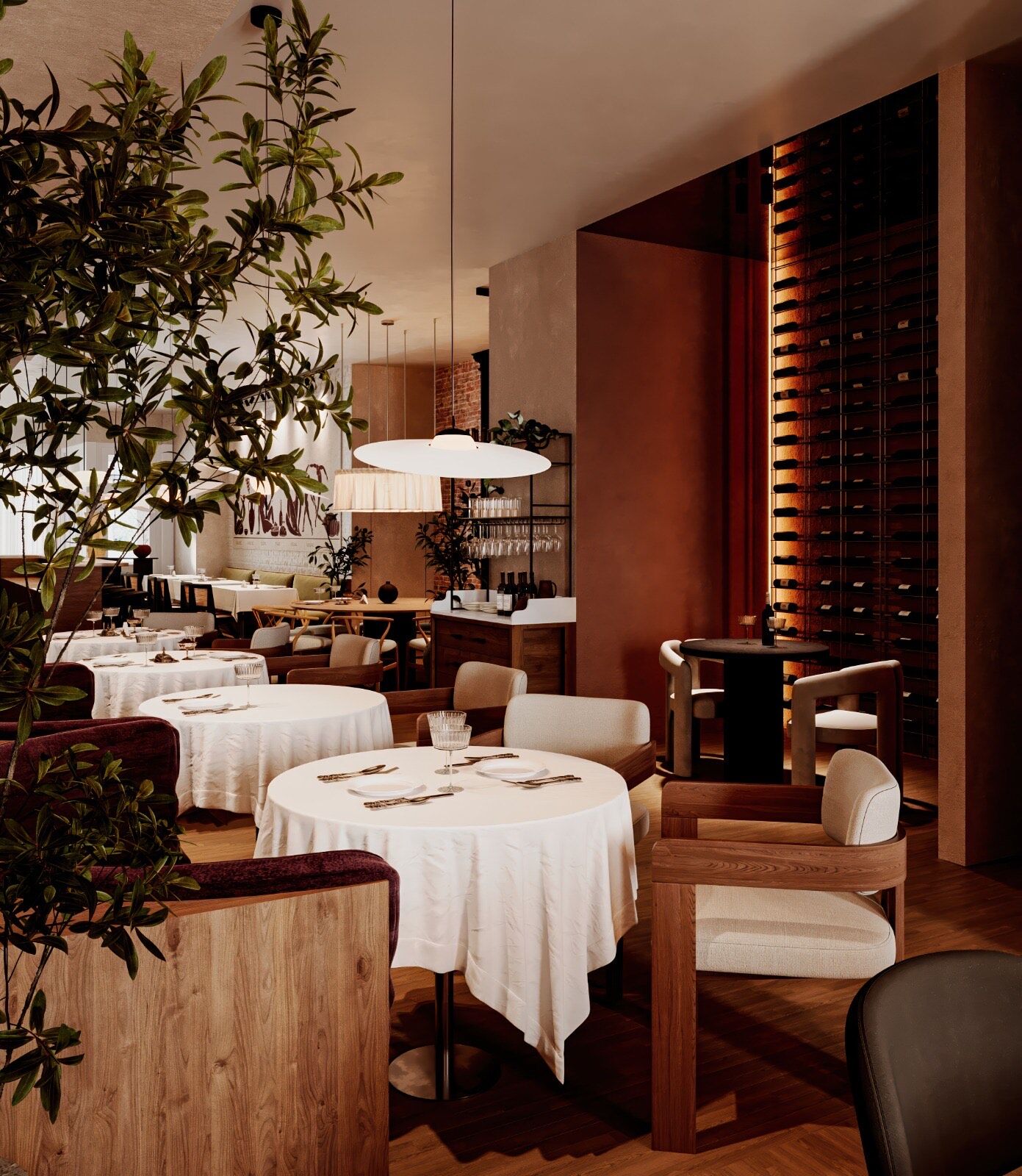
Start by sorting the images. Which are photographs of completed projects, and which are visualizations? Renders have a legitimate place in the design process. A portfolio made mostly of them means the designer has drawn more rooms than they have delivered, and you are being asked to fund the difference.
Then ask about role. "Projects" on a portfolio page can mean lead designer, junior contributor on a forty-person team, or a concept that never broke ground. Ask which projects the person across the table actually ran, start to finish, and whether the client would take your call. A designer confident in the work will offer the reference before you finish the sentence.
Our own portfolio at ORÉA COLLECTIVE is short by intention: Sesilya, a Georgian restaurant in Park Slope; Sesilya Bakery, also in Park Slope; and The Retreat, a private residence in the Georgian countryside. Three built projects, photographed as they operate, is a book we can answer for line by line. Hold whoever you hire to the same standard: built, recent, and verifiably theirs.
The questions that reveal process quality
Five questions do most of the work in a first meeting.
Who files the permits? Most construction in New York requires a Department of Buildings permit, and in most cases a New York State licensed Professional Engineer or Registered Architect must file plans and pull permits before work begins. Interior designers do not file these themselves; the good ones have a standing RA or PE relationship and can name the person. Hesitation here usually means they have not shipped much work in this city.
What does the drawing set look like before trades price the job? Ask to see a sample set from a past project. Sparse drawings produce sparse bids, and the gap gets filled with change orders after demolition.
For a restaurant: what is your read on my licensing calendar? The State Liquor Authority review currently takes roughly 22 to 26 weeks for most license types. A designer who sequences the build against that calendar, rather than discovering it in month four, saves you rent. Our permits and timeline breakdown walks through the full sequence.
For an older building: have you worked under Landmarks? If the property is a designated landmark or sits in a historic district, the Landmarks Preservation Commission must permit the work before it starts, through a Certificate of No Effect, a Permit for Minor Work, or a Certificate of Appropriateness. A designer who has been through Portico once is worth a premium on a brownstone.
Who will actually be in the room? At many firms the principal sells the job and a junior team executes it. Ask by name who attends site visits. For what it is worth, our answer at the studio is that both founders are on every project, and full drawing sets exist before any trade is engaged.
Red flags worth walking away from
- A portfolio of renders with no photographed, completed rooms.
- Vagueness about the DOB, or a breezy claim that permits are rarely needed. Some work is genuinely exempt under NYC Administrative Code §28-105.4.5, such as painting, new kitchen cabinets, and plumbing fixture swaps. A restaurant build-out is not that.
- A fee that cannot fit on one page, or shifts when you ask about it.
- Compensation that is entirely purchasing markup, with no visibility into trade pricing.
- No client references from the last two years.
- Drawings promised "as we go." Construction without a complete set is a change order on layaway.
None of these is fatal alone. Two together is a pattern.
How an engagement usually starts
Not with a contract. The first step is a conversation about scope, budget, and timeline; a designer who does not ask about money in the first meeting is not being polite, they are being vague. Then a site walk. Then a written proposal covering scope, fee structure, deliverables, and schedule, with a retainer due at signing.
Timing matters more than most people expect. If you plan to hire an interior designer in NYC for a restaurant, the cheapest moment is before the lease is signed, when the layout, the gas line, and the venting can still influence which space you take. We wrote about that decision in before you sign the lease. For a residence, the equivalent moment is before you commit to finishes, while the drawings can still move walls on paper instead of invoices.
Budget two to three weeks of honest looking and one direct conversation about money; skipping either is how a build goes sideways. If you are planning a restaurant or a renovation in New York, start with a conversation.